
In my own work with medical technology companies, I have always seen that selling modern medical equipment is truly a challenge. Devices are loaded with options, configurations, modules, accessories, each needing precise compatibility and regulatory sign-off. Factor in strict compliance rules and an avalanche of product details, and there’s a clear risk: quoting errors. These mistakes can mean lost sales, regulatory risks, or damaged reputation. That’s why Configure, Price, Quote (CPQ) software is no longer optional. It is now what I consider to be the difference between slow, risky deals and sales teams that deliver fast, secure results that win trust and revenue.
Let me break down why.
Why medical equipment sales are so complicated
Unlike selling something simple, such as office supplies, medical device sales require balancing long product lists, regulations, and critical configuration steps for each client’s unique needs.
- Devices come in base models with many optional modules, imaging, diagnostics, communication, even power supply variations.
- Accessories must be compatible, with choices affected by software editions, local laws, or patient volume.
- Connectivity to hospital IT systems adds technical challenges, not every interface works everywhere.
- Regulatory compliance is strict: the wrong configuration may be illegal, not just annoying.
I’ve seen many reps double-checking with technical specialists, just to make sure they aren’t setting up impossible combinations, or worse, sending a non-compliant quote to a hospital administrator. That’s time lost, and risk growing.

How CPQ software reduces complexity and risk
So, how do you keep all those devices, rules, and prices straight? CPQ software brings all this together: it guides reps step-by-step, stops invalid options, generates clear and legal quotes, and links into everything you already use like your CRM, ERP, or e-signature tools (such as CloudSign.ie). Here’s the effect: instead of consulting spreadsheets, guessing, or puzzling over a catalog, my clients’ teams simply follow system prompts that guarantee a correct result.
Features to look for in CPQ for medical device sales
- Advanced catalogs with bundles and quick updates. A quality CPQ must support complex bundles, imaging devices with specific detectors, software, and accessories, and let you update prices or specs fast, so reps always have what’s current.
- Rules-based configuration. These stop impossible combinations. For example, if a mobility module requires a high-power battery, the CPQ blocks reps from creating an invalid quote.
- Flexible pricing engines. Medical sales are never “one price fits all”, look for bundled pricing, recurrent fees, deal-specific discounts, and margin alerts. Lifecycle management tools can also help you watch contract terms and renewal dates.
- Quote generation tools. The best systems create branded, editable quotes, even letting buyers interact with options. It’s much more than a PDF download, it’s client experience redesigned for clarity.
- Approval workflows and compliance controls. With regulatory risk so high, you need automated compliance checks and easy-to-audit sign-offs. If a quote requires a manager or legal sign-off, CPQ ensures it cannot move forward until those happen.
- Sales pipeline accuracy and cash flow velocity come in: deals use real inventory, pricing, and client history instead of out-of-date information.
- Analytics for performance. Real reporting does more than count deals. I recommend choosing a solution that offers insights, not just numbers, on successful configurations and pricing trends.
- Security and scalability. Hospitals and clinics need their data safe. The CPQ you choose must offer proper authentication, encryption, and ability to handle everything from small clinics to multi-region device distributors.
- Easy user experience. Training shouldn’t drag on for weeks. Well-built CPQ platforms (like those that CloudSign.ie integrates with) usually feel like a natural extension of CRM and require minimal onboarding.
Honestly, once the system is set up, I notice most reps work confidently after a day or two. The CPQ acts like GPS for medical sales, it doesn’t make you an expert, but it keeps you from bad routes and dead ends.
CPQ tools: What fits your product complexity?
Not every medical equipment business is the same. In my own projects, I’ve seen success come from matching the solution to the scale:
- Basic: Platforms like PandaDoc are helpful for businesses with straightforward products. Their quoting modules suit simple catalogs and standard pricing, though you might need more for advanced configuration.
- Mid-tier: Salesforce CPQ works well for more detailed product lines. Where compliance rules are tough or bundles multiply, it covers most real-world cases. You can connect it to tools like CloudSign.ie for quick, secure e-signatures, which keeps the proposal process on track. For document handling and advanced contract management, I suggest also considering guides like this overview of contract management software.
- High-end: When each device is highly customizable (imaging systems, modular surgical robots), Tacton or similar heavy-duty CPQs support 3D visual configuration, complex logic, and direct ERP links. But costs and learning curves go up.
It’s tempting to grab the most popular tool, but my advice is simple: opt for what matches your need. Sometimes, combining solutions, PandaDoc for simple docs, Salesforce for approvals, CloudSign.ie for digital signatures, gives you more control and safety than all-in-one platforms.
CPQ manufacturing: what does it mean in medical?
CPQ for manufacturing, especially in medical equipment, isn’t just about pricing and quoting. It combines engineering rules, regulatory checks, bundled accessories, and cost data into one smooth process, so that every quote is technically sound, legally valid, and commercially viable on the first try. Gone are the back-and-forth emails; mistakes that used to require expensive corrections simply don’t happen.
System connection: CPQ, CRM, ERP and e-signatures
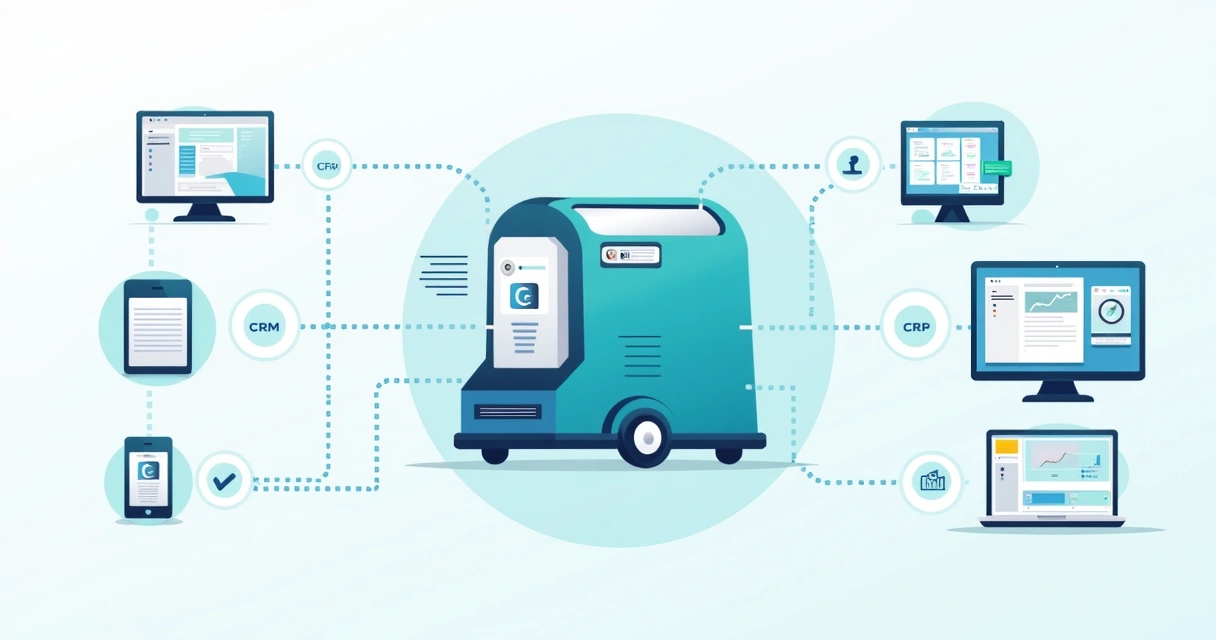
Here’s how it looks in real life. The rep starts with the latest product catalog in the CPQ. They pull up customer info and sales history from the CRM. The CPQ talks to the ERP so it knows what’s in stock and up-to-date costs. Once the quote gets approved (often with workflow triggers), the signed contract pushes everything back to the ERP for supply chain or to the CRM for renewal alerts later on.
Automating signatures with platforms like CloudSign.ie makes this even tighter, reducing turnaround times to hours, not days. I recently saw one client eliminate 70% of their quoting errors just by removing manual PDF handling, by integrating secure e-signatures and better contract workflow. You can read more about the value of digital signatures in medical deals from the digital signature software guide.
What are the real business benefits of CPQ in medical sales?
- Far fewer errors and compliance risks. Automated configurations keep you legal, safe, and efficient, even as products and rules change.
- Deals close much faster. I have seen quoting cycles drop from weeks to days, sometimes even hours for simpler medical equipment.
- Scaling is easy. If the product line or team grows, CPQ scaling is far smoother than training new reps from scratch.
- Happier customers. No more waiting for corrected quotes or endless clarifications. Reps arrive with the right answer the first time.
- Better control of profits and upsells. Discounting and bundling rules keep margins safe and highlight extra add-ons that may have been missed manually.
Concrete data backs this up. When Nevro moved to a CPQ model, it earned ROI in under eight months. They saw quoting speeds improve by 95%, and errors drop by around 70%. One large medtech manufacturer reported a 66% improvement in quote turnaround and saved about $200,000 a year, just by avoiding preventable mistakes. Industry research reported by HIT Consultant shows that deal closures speed up and revenue leakage drops when CPQ connects sales processes with real-time data.
CPQ systems also pair well with e-signature and contract management platforms. When your CPQ feeds approved quotes directly to systems like CloudSign.ie for digital signatures, you get better contract tracking and no paperwork delays, a big win in strict regulatory environments.
So, should you use CPQ for medical equipment sales in 2024?
If your deals involve complex products, pricing, regulations, and buyers, CPQ takes you from risk to reliability.
After seeing so many sales teams struggle and then thrive after adopting CPQ, I’ve changed from skeptic to advocate. Modern digital signature tools seal deals faster. CPQ brings together sales, pricing, regulatory, and contract controls to remove friction where it hurts most.
If you want your next quote to be right, not just “good enough”, consider how your process stacks up against these proven results. To see how CloudSign.ie can link your CPQ and e-signature workflows for results like these, I invite you to learn more about our platforms or try out our free plan today. Medical equipment sales move fast when your contract and quoting tools move even faster.
Frequently asked questions
What is CPQ in medical equipment sales?
CPQ (Configure, Price, Quote) is specialized software that helps sales teams create accurate quotes for complex products, like medical devices, by guiding users through product options and prices, preventing invalid or non-compliant combinations, and automating all key steps from configuration to contract.
How does CPQ help medical sales teams?
CPQ tools help medical sales reps work faster, with fewer mistakes, by automating configuration rules and pricing models. They also handle compliance checks and connect with inventory and customer data systems, replacing manual paperwork and back-and-forth communications.
Is it worth it to use CPQ software?
In my experience, CPQ pays off for companies with complicated products, strict regulations, or growing sales teams. The time and error reduction usually lead to much faster quoting cycles and fewer lost deals. Companies like Nevro report savings in both time and money within the first year of use.
How much does CPQ software cost?
Costs can vary from affordable monthly fees (for basic solutions) to substantial investments for advanced CPQ systems tailored to your product complexity. Most mid-sized firms spend from several hundred to a few thousand euros per month, but for high-complexity needs, costs will be higher. I’d recommend starting with a trial or pilot if possible, or using the free tier at CloudSign.ie to manage e-signatures as you upgrade your quote process.
What are the best CPQ tools for 2024?
For simple products, solutions like PandaDoc are often enough. For mid-level complexity, many use Salesforce CPQ due to broad CRM integration. Tacton is strong for heavily customizable medical devices. However, integrating niche tools with platforms like CloudSign.ie gives you a faster contract process and stronger security, making it my preferred route for most teams seeking speed, legal compliance, and transparency in medical equipment sales.