
If there’s one thing I’ve learned helping businesses prepare for HIPAA, it’s this: simple contracts are not always simple when PHI (protected health information) is involved. There’s an entire category of agreements, Business Associate Agreements or BAAs, that can trip up even experienced managers. In this guide, I’m going to walk through who really needs a BAA, the critical contents, and exactly why getting it right is so important today. Follow along and you’ll have clarity (and peace of mind) when dealing with sensitive information.
What is a BAA and who actually needs one?
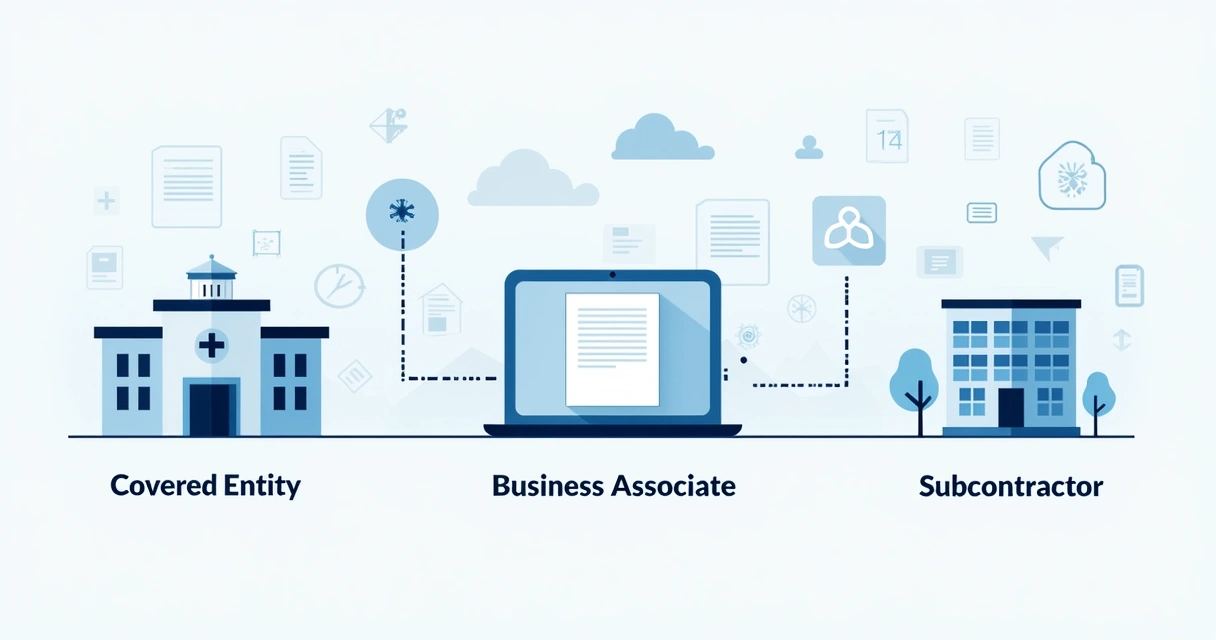
I’ve seen many organizations confused about BAAs, often thinking every business working with patient info must sign one. But that’s not the case. A Business Associate Agreement (BAA) is a specific type of legal contract required under HIPAA between a covered entity, healthcare providers, healthcare clearinghouses, organizations transmitting PHI electronically as defined by HHS, and hybrid entities like universities with student medical centers, and any external business associate who handles protected health information (PHI).
So, the short answer is that not all parties dealing with PHI need a BAA. It’s only required when a covered entity relies on an outside person or company for services touching PHI. The agreement details exactly how that information is managed, shared, stored, and protected. You can find more about e-signature compliance in regulated industries, like healthcare, on CloudSign.ie’s guide to e-signature compliance.
Who qualifies as a business associate?
In my experience, business associates take many forms, depending on the services they provide. The only thing that matters is whether they deal with PHI.
- Vendors supplying cloud-based file sharing tools where PHI is stored or processed
- Medical equipment servicing companies if their work exposes them to PHI
- Translation services working on patient files
- Law firms managing healthcare legal cases
- Cloud-based software, like contract management platforms
- Accounting firms, consultants, and even document shredders handling PHI items
If the service could possibly touch or see PHI, even once, the provider needs a BAA with the covered entity. I’ve found many clinics and hospitals overlook things like translators or external IT support, only to later realize those vendors count.
Subcontractors, employees, and independent contractors
Here’s where things get trickier. Business associates sometimes turn around and hire subcontractors. If these subcontractors could access, use, or create PHI, they often need BAAs of their own. There’s one exception called the “conduit rule”, shippers like FedEx or UPS that only transport info and don’t open, view, or change it generally do not need BAAs.
Employees are different. They’re not considered business associates at all. Instead, employers must train them in HIPAA best practices, as described in the CloudSign.ie article on handling signature requests for sensitive documents. There’s no BAA, just internal security policies and regular staff training.
As for independent contractors, if they only work for one business and aren’t handling PHI as outsiders, then a BAA isn’t needed either. In these situations, a regular confidentiality agreement makes more sense, outlining which PHI is covered, what must be deleted or returned, the allowed data actions, and protocol if a breach occurs. It’s easy to get this mix wrong and put the business at risk.
What makes a BAA different from a standard contract?
I’ve seen many managers assume a regular business contract is enough, but a HIPAA-compliant BAA is very different. Why? Because it goes beyond simple promises and must spell out how subcontractors are handled. Covered entities and business associates both carry obligations. This “chain of trust” means that even if only one link is weak, information security fails.
Not every subcontractor always needs a BAA, depending on their role. Still, the main business must document its due diligence, knowing exactly what each vendor does and the level of PHI exposure. Regular audits and documentation are key; only then are you safe from claims of willful neglect.

Core contents of a solid BAA
Every time I read or draft a BAA, I look for certain points that must not be missed.
- Clear rules on PHI use and when it may be disclosed, and to whom
- Specific technical and physical protections for PHI storage (including digital security controls and secure shredding of paper)
- Procedures granting patient access to their info upon request
- Assignment of responsibility for potential HIPAA violations and coverage of any related regulatory actions
- Requirements for mandatory staff training and education about PHI
- Emergency plans for possible data breaches, including notification steps and harm control
- Explicit rules for deleting or returning PHI after the contract ends or if required by law
- Ensuring all downstream subcontractors follow these same rules
- Instructions on secure, reliable storage of all signed copies of the BAA (which is where digital platforms like CloudSign.ie stand out for safety and simplicity)
- What happens if PHI must be released for legal reasons
I tell clients to avoid complex, jargon-filled language or poor formatting in these agreements. If terms or policies aren’t explained clearly or have not been checked against HIPAA compliance through formal risk assessment, you’re taking unnecessary risk. This is where templates from solutions like PandaDoc are sometimes referenced, but these platforms often lack the full scope of automation, compliance hints, or transparent record-keeping you’ll find with modern platforms like CloudSign.ie.
And for step-by-step help writing reliable business contracts, the CloudSign.ie guide to clear business contracts is worth checking out as well.
Penalties for HIPAA violations and why it matters
The subject of BAA risk isn’t theoretical. HIPAA penalties hit hard. I’ve seen published cases where oversight led to fines well above $100,000 and even triggered criminal charges. Jail terms for willful, knowing violations can range from one year (for basic negligence) up to ten years for those acting with intent to sell or use PHI maliciously.
The regulatory expectation is that organizations show they took real, reasonable steps to protect patient data, not just empty “check-the-box” paperwork. If you’re ever unsure, a legal advisor with HIPAA experience (not just a general business lawyer) is a smart investment.
To check whether your document workflow is showing any data breach warning signs, see CloudSign.ie’s advice on recognizing a PHI data breach. I suggest sharing that with your compliance team.
BAA vs NDA: what’s the difference?
Clients frequently confuse Business Associate Agreements with standard Non-Disclosure Agreements. But they are not interchangeable. A BAA is designed specifically for HIPAA-regulated PHI and spells out detailed obligations for privacy, security, breach notification, and required procedures. On the other hand, an NDA is a generic confidentiality agreement for business secrets or trade info. Sometimes you might use both, an NDA to cover business processes or pricing, and a BAA for all PHI.
Contract length, signature, and safe record-keeping
BAAs last as long as anyone in the relationship is handling or storing PHI. But here’s the part I see missed most: copies of every signed BAA need to be kept securely for at least six years after the relationship, or any PHI processing, ends.
It’s also common to wonder about contractors. I’ve been asked, “If someone is a contractor, do we always need a BAA?” The answer is no. All business associates are contractors, but not all contractors do work that qualifies. Only when they act for a covered entity and touch PHI do you have to go further.
One more good thing: HIPAA does allow electronic signatures for BAAs, as long as the platform manages secure authentication, tamper prevention, and proper record-keeping. CloudSign.ie, thanks to its robust AI-powered access controls and legal validity, easily leads here. Other platforms like DocuSign or PandaDoc can offer templates, but often lack the level of contract automation and risk management features that CloudSign.ie brings to organizations of all sizes.
What to avoid and how to simplify your BAA process
I’ve seen BAAs fail when documents are confusing, terms are inconsistent, or no proper risk review is done. Always keep these mistakes in mind:
- Unclear language or ambiguous definitions
- Redundant, unnecessary sections not tied to real HIPAA requirements
- No procedure for regular review and update based on annual risk assessment
- No clear responsibility assignment, leaving gaps in security or training
If you don’t have a legal team, it’s smart to seek advice. Digital tools make it safer and easier. While platforms like PandaDoc offer templates and e-signature flows, CloudSign.ie strengthens the process with AI-driven monitoring, automated renewal, and advanced integrations with storage and CRM tools, which competitors generally lack. If you want a full roadmap for contract management and digital signatures, my favorite starting point is CloudSign.ie’s complete guide to contract management software.
Conclusion
Drafting a clear, correct BAA does more than check a HIPAA box, it protects both patient trust and your business reputation. There’s a strong argument for templates (look for free BAA samples from reputable providers), but never use them blindly. They are only as good as your review. And remember, only with platforms like CloudSign.ie can you manage, sign, store, and audit these agreements from any device, ensuring standards are actually maintained rather than simply filed away. If you want to keep your PHI and contracts truly safe and transparent, take a closer look at what CloudSign.ie can do for your business. Try our free tier and see the difference for yourself.
Frequently asked questions
What is a HIPAA Business Associate Agreement?
A HIPAA Business Associate Agreement (BAA) is a legally required contract between a HIPAA-covered entity and an outside person or company (a business associate) that will have access to protected health information in the course of their work. It defines responsibilities for keeping patient data safe, reporting breaches, and ensuring the associate’s subcontractors (if used) also follow HIPAA rules.
Who needs to sign a BAA?
Any outside company or person (business associate) providing services to a covered entity, where access to PHI is likely, needs to sign a BAA. This includes vendors, consultants, software providers, shredding services, and any subcontractor who could see or use PHI. Internal employees never sign a BAA, but must have HIPAA training.
What are the risks of not having a BAA?
If you skip a proper BAA, your organization faces steep financial penalties (sometimes over $100,000 per violation), possible criminal charges, and a public loss of patient trust. Layered on top are the specific regulatory requirements to keep, review, and update agreements for at least six years after relationships end. Missing these steps can result in serious consequences.
How can I create a compliant BAA?
To create a compliant BAA, identify all business associates and their subcontractors, clarify uses of PHI, detail required security controls and breach procedures, and use clear, easy-to-understand language. It’s safest to use proven digital contract tools like CloudSign.ie, which help manage electronic signing, record storage, and staff access with current security standards. For tricky situations, consult legal counsel familiar with HIPAA.
When is a BAA required under HIPAA?
A BAA is needed whenever a covered entity hires an outside company or person to process, store, or access PHI as part of their role. Examples include cloud services, IT consultants, medical transcription, secure file storage, or legal support involving health records. An NDA alone will never replace a proper BAA for HIPAA-regulated activities.